GLPI AssistIA
Optimize your GLPI HelpDesk with the help of artificial intelligence.
GitHub Repository
Use Case
Incident management, especially in IT departments, requires tasks that are often repetitive such as reviewing wikis, documentation, or executing verification commands to specific servers. GLPI AssistIA seeks to serve as a baseline to reduce all this workload by providing a preliminary report of the incident to be addressed. Once an incident is registered in the system, it is sent to a server (GLPI AssistIA Server) that searches for all related information and generates a report with possible solutions. This report will be visible to the agent handling this incident as a private note the moment they take the case, so they only have to worry about providing the best possible service to the client.
Evolution of the Agents
The GLPI AssistIA agents have evolved through several prototypes, each adding new functionalities and capabilities to improve incident management. Below, the main milestones in this evolution are described:
Prototype 1
A basic agent was implemented with a single summarization function for a GLPI ticket, sending the result to a file on the server.
Prototype 2
The ability to ping an IP address provided in the ticket was introduced, and the reading of Wiki.js documentation was improved. This allowed the agent to respond more effectively to connectivity incidents.
Prototype 3
Multiple agents with specific roles (Analyst, Resolver) were integrated, and a workflow was implemented so that agents could interact and collaborate in solving more complex problems. The concept of an MCP data bus was introduced.
LLM Models Analysis
For the development of GLPI AssistIA, a comparative analysis of several language models was performed to determine which would be the most suitable for the project. The goal was to find a model that offered a balance between processing capabilities, cost, and the ability to be self-hosted to ensure data privacy.
The orchestration of the agents was carried out using the CrewAI library, which facilitates collaboration between different specialized agents. Both open-source and proprietary models were considered, paying special attention to the flexibility for their integration into the server. This analysis was crucial to optimize the performance and efficiency of the system in the GLPI environment.
For more details, you can consult the full document in the project repository.
View full analysis document
Architecture and Overview
The core of the system is designed around a workflow triggered by the creation of a ticket in GLPI. The ticket information is processed by a system of intelligent agents (CrewAI) that collaborate to analyze, enrich, and propose solutions. This CrewAI connects to external tools (knowledge bases, monitoring systems) through an MCP (Model Context Protocol) Server, which acts as a data bus.
Ticket Workflow
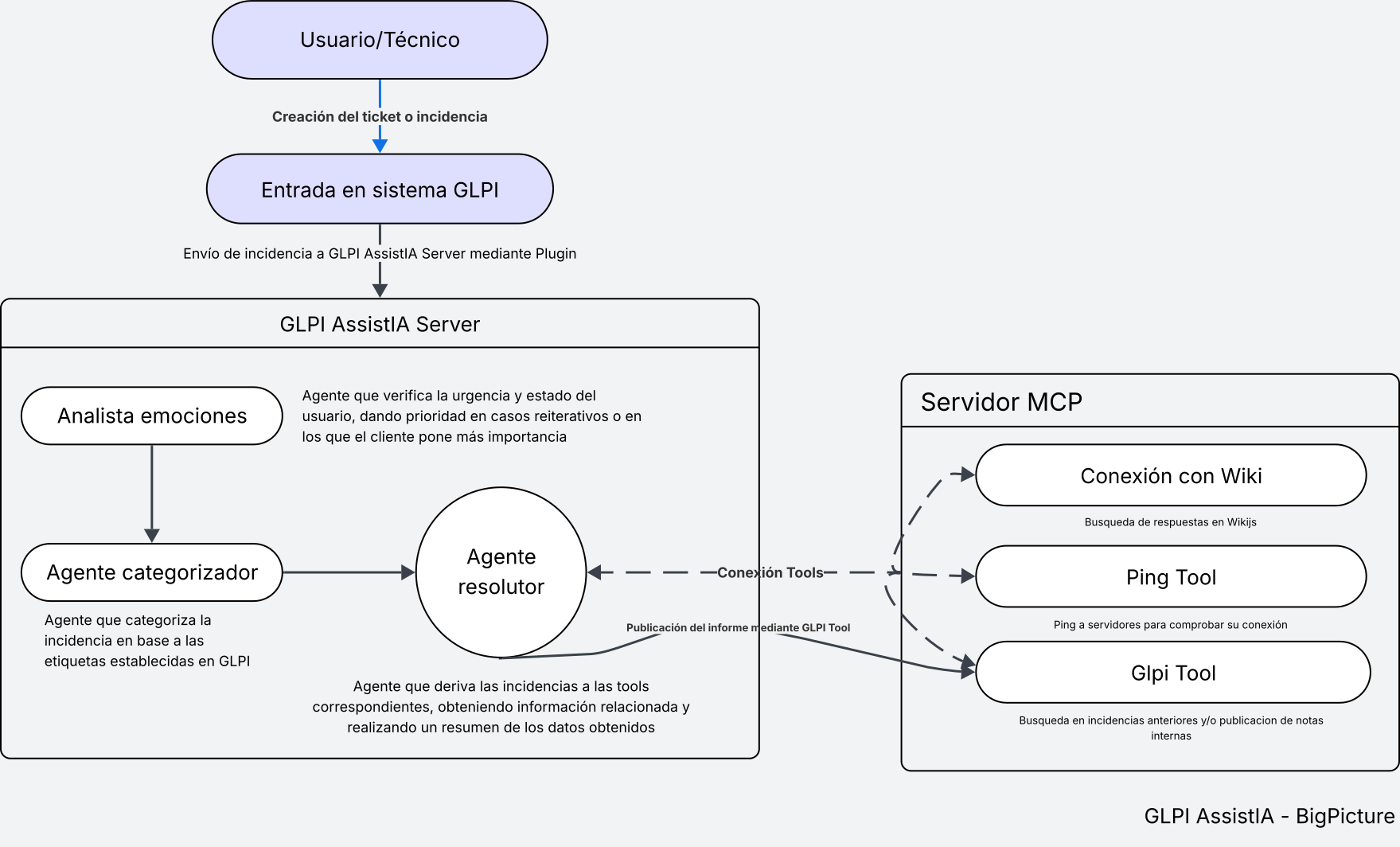
- GLPI Entry: A user or technician creates an incident ticket.
- Agent Activation: The incident is transferred to the CrewAI system hosted on the GLPI AssistIA Server for processing.
- Analysis by AI Agents: A team of agents evaluates the urgency, classifies the incident, and reviews historical data to propose a solution.
- Response in GLPI: The generated solution and analysis are published on the GLPI ticket, assisting the technician or responding directly to the user.
Configuration and Usage Example
Main Features
- Ticket Summarization and Enrichment: The AI analyzes and summarizes the user's problem, adding technical context.
- MCP Architecture: A decoupled data bus to facilitate communication and scalability.
- Intelligent Contextual Information: Provides relevant information to both technicians and users.
Practical Cases
Plugin Interface
Success Metrics
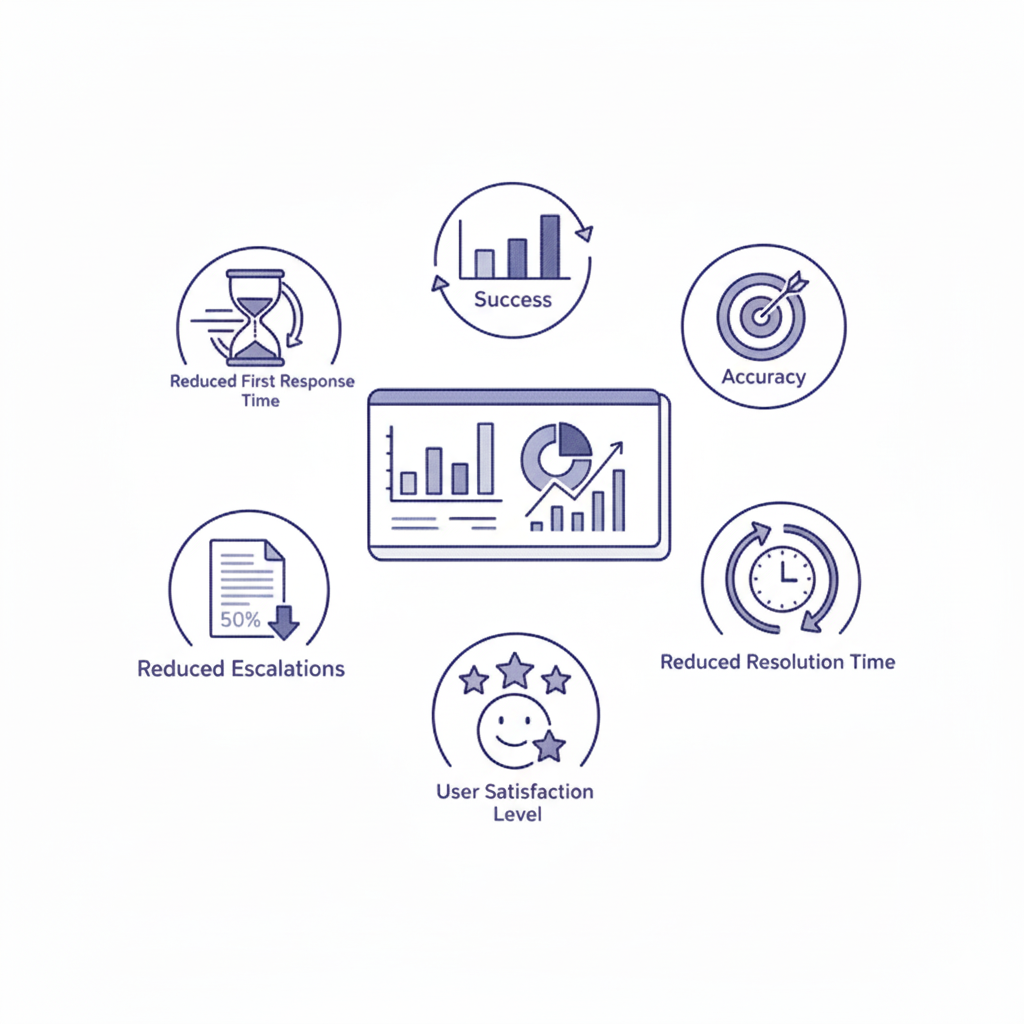
The success of the project will be measured by achieving the following objectives:
- Reduction of more than 70% in first response time.
- Accuracy higher than 85% in the generated automatic responses.
- Reduction of more than 50% in tickets that need to be escalated manually.
- Reduction of more than 40% in average incident resolution time.
- User satisfaction level above 4.0/5.0.
Collaboration
This project has been made possible thanks to the ANFAIA Summer Scholarship program and the collaboration of Aitire.